Build a 90-day household reserve
Start with 3 days. Grow to 2 weeks, then 30, 60 and 90 days. This is an optional extended planning goal, not a universal government requirement.
Download one-page PDF ↓Water in the cupboard. A light in the dark. A plan for everyone you love. Practical preparedness starts with one useful step.
Get the free starter set ↓Find your first step →
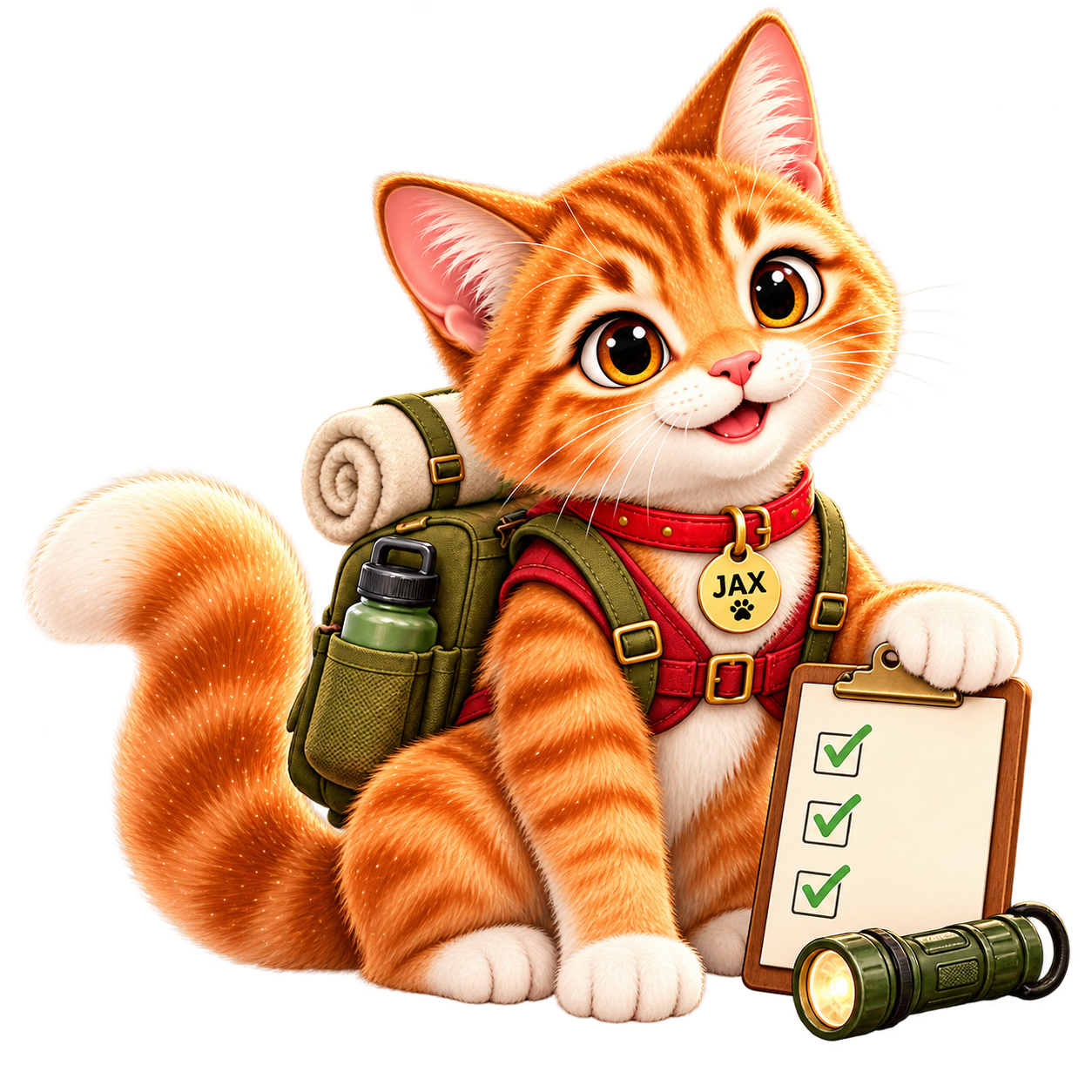
Choose a comfort item with a grown-up for your family kit.
A small action for families to try together. New habit daily at midnight Eastern.
Find your flashlight. Write down three important numbers. Choose a household meeting place.
Build a small reserve of water, familiar food and daily essentials. Include every animal.
Grow your reserve within your budget. Use it, replace it and review your plan as life changes.
Get ready with a grown-up, one little step at a time. Check off five activities, color your badge, and celebrate with your own Ready Club certificate.
No rush, no score—every little step counts.
0 of 5 activities complete
You practiced five helpful habits together. Print your certificate and celebrate your teamwork!
Grown-ups lead emergency planning and safety. This club celebrates learning and teamwork. Progress is saved only in this browser when storage is available; a shared device shares the same checklist.
Start with 3 days, grow to 2 weeks, then work toward 30, 60 and 90 days. A 90-day reserve is our extended planning goal; your space, budget and needs set the pace.
Count water, food, hygiene supplies, animal needs and essential health items. Plan safe storage and rotation before buying in bulk.
Baseline: at least 1 gallon per person per day for drinking and sanitation. Add animal water and extra for individual needs, heat or illness. A large reserve needs substantial safe storage.Simple black-and-white friendly pages. No account, no email gate. Download now and keep a paper copy where everyone can find it.
Download all four sheets ↓Start with 3 days. Grow to 2 weeks, then 30, 60 and 90 days. This is an optional extended planning goal, not a universal government requirement.
Download one-page PDF ↓Keep this sheet beside a flashlight. Leave early for a safe location if your home cannot meet medical, heating or cooling needs.
Download one-page PDF ↓Complete one sheet per animal. Ask your veterinarian about species-specific food, water, temperature and medication requirements.
Download one-page PDF ↓Focus on communication, safe exits and avoiding hazards. Follow local emergency instructions. In an immediate emergency in the U.S., call 911.
Download one-page PDF ↓Meow! Welcome to my family's preparedness kit. These are supplies my family owns and keeps ready. Explore them with a grown-up and choose what fits your household's needs and budget. - Jax
Affiliate disclosure: As an Amazon Associate I earn from qualifying purchases. We may earn a commission when you buy through the links below.
A solar and USB rechargeable lantern with the option to run on 3 AA batteries. Its High, Low and Night Light modes give you choices for lighting a shared space during an outage.
Why consider it: Multiple power options give you flexibility when an outlet is unavailable. Charge it ahead of time and keep backup batteries with your outage kit. Solar charging depends on available sunlight; plan a backup.
This item is owned and kept in the family kit featured by Jax. GoDisaster has not independently tested its performance. Product features are based on the Amazon listing. Check current specifications, price and availability before buying.
View lantern on Amazon ↗This black travel and laptop backpack is listed with a 55-liter capacity and water-resistant construction. Consider it as a container for a household member's portable essentials.
Before choosing: Check the dimensions and fit, then test the bag with the weight you can comfortably carry. A large bag can become too heavy quickly. Use sealed pouches for papers and moisture-sensitive supplies; water-resistant does not mean waterproof.
Keep the essentials together: Your contact sheet, flashlight, basic hygiene items and other supplies suited to your household. If you already own a comfortable, sturdy backpack, start with that.
This item is owned and kept in the family kit featured by Jax. GoDisaster has not independently tested its performance. This is a travel/laptop bag, not verified specialist rescue equipment. Check current specifications, price and availability on Amazon.
View backpack on Amazon ↗This four-pack includes waterproof safety matches with water-resistant boxes and strikers. A compact backup for permitted outdoor fire starting.
Store and use thoughtfully: Keep the matches and striker dry in a sealed container, away from heat and out of reach of children and animals. Follow package directions and local fire restrictions. Never strike a match if you suspect a gas leak. Outdoor grills and fuel-burning camp stoves must stay outdoors; use a flashlight or lantern for outage lighting.
This item is owned and kept in the family kit featured by Jax. GoDisaster has not independently tested its performance. Check current specifications, price and availability on Amazon.
View matches on Amazon ↗A red portable first-aid kit listed with 300 pieces, intended for home, car and camping use. This kit is among the family preparedness supplies featured by Jax.
Make it your own: Review the actual contents against your household's needs. Piece count alone does not tell you whether a kit has the supplies you need. Check expiration dates and packaging, replace used items and keep supplies accessible to the adults who need them.
GoDisaster has not independently tested this kit. A supply kit does not replace first-aid training or emergency medical care. Check current contents, specifications, price and availability on Amazon.
View first-aid kit on Amazon ↗Read one now, or choose your household's most useful topic.
The first plan is for your home; the second is for the day home becomes too hot. Write down a library, community center, or other cooling location that is actually available near you.
Read articleMoving air can feel helpful, but a fan cannot replace a reliably cool environment in dangerous heat. CDC guidance notes that fans may increase body temperature when indoor conditions are above 90°F.
Read articleDogs and other animals may overheat quickly when exercise, sun and hot surfaces combine. Pets also need shade and access to water on very hot days.
Read articleA pickup delay can become uncomfortable when a parent, child or caregiver waits outside in direct sun. A little scheduling protects everyone.
Read articleOlder adults, people with certain medical needs and households without effective cooling may need extra planning during heat. A simple, respectful check-in can reveal a practical gap.
Read articleA thunderstorm does not need to be directly overhead for lightning to be hazardous. Hearing thunder is already a signal to seek proper shelter.
Read articleWhen a severe thunderstorm warning arrives, the hard part should not be finding a flashlight or shoes. Keep a compact list where everyone sees it.
Read articleStrong rain, poor visibility and flying debris can make driving hazardous. Different alerts, including tornado and flash-flood warnings, may call for different actions.
Read articlePicnics, sports and community fairs need a decision rule before thunder starts. Organizers can reduce confusion with a named weather watcher.
Read articleA quiet sky does not mean that roads, trees and electrical systems are safe. Downed branches, floodwater and wires may remain dangerous.
Read articleAn outage plan is easier when divided into short phases. First, confirm your household is safe, find a light and check whether emergency alerts are active.
Read articleA generator can help maintain essential power, but misuse creates a serious carbon monoxide risk. The fumes are invisible and can be deadly.
Read articleYou do not need a television-ready bunker to find a flashlight. Make an obvious drawer or basket for essential tools that are used in the dark.
Read articleFood safety depends on time and temperature, not simply on smell. Doors left open repeatedly make safe storage time shorter.
Read articleSome households rely on electrically powered medical devices or refrigerated medicines. That changes the urgency of outage planning.
Read articleFloodwater can cover missing pavement, moving water or hidden hazards. A familiar road can become unsafe within minutes.
Read articleWhen evacuation is possible, a small waterproof document set reduces the scramble for insurance details and medication lists.
Read articleA wet basement can present an electrical hazard, even if the water appears shallow. Damage assessment is not worth a serious injury.
Read articlePets cannot read evacuation maps, but they do need leashes, carriers, food, medication and a destination that accepts animals.
Read articleFloodwater may carry sewage, chemicals and sharp debris. Cleanup requires more than opening a window and starting a fan.
Read articleWinter preparation is not only about buying snow shovels. It includes how the household will stay warm if heat, power or transportation fails.
Read articleA familiar commute can change when snow, ice or a closure leaves drivers unexpectedly waiting. Keep essentials appropriate to the season.
Read articleFrostbite and hypothermia are medical emergencies that may begin subtly. Shivering, confusion, numbness or unusually pale/waxy skin deserve attention.
Read articleIt is tempting to use whatever burns when the heat goes off. That shortcut can produce carbon monoxide or fire.
Read articleThe risk after a winter storm can include untreated icy surfaces, blocked access, and delayed supplies. Thoughtful neighbor support starts with a quick check.
Read articleWe believe useful preparation should fit real homes, real budgets and every member of the household. Begin small. Make a plan. Keep a printed copy.
These educational resources do not replace current emergency instructions or individualized medical or veterinary advice. Follow local authorities; call 911 for an immediate U.S. emergency.
Official references: Ready.gov emergency kits · Ready.gov pets · CDC food safety · National Weather Service